
How to Optimize Your Uber Eats Menu Photos in 2026
Improve your dish images with tools like AI Food Photo to achieve studio quality, meet Uber Eats requirements, and create a more appetizing and competitive menu in minutes.
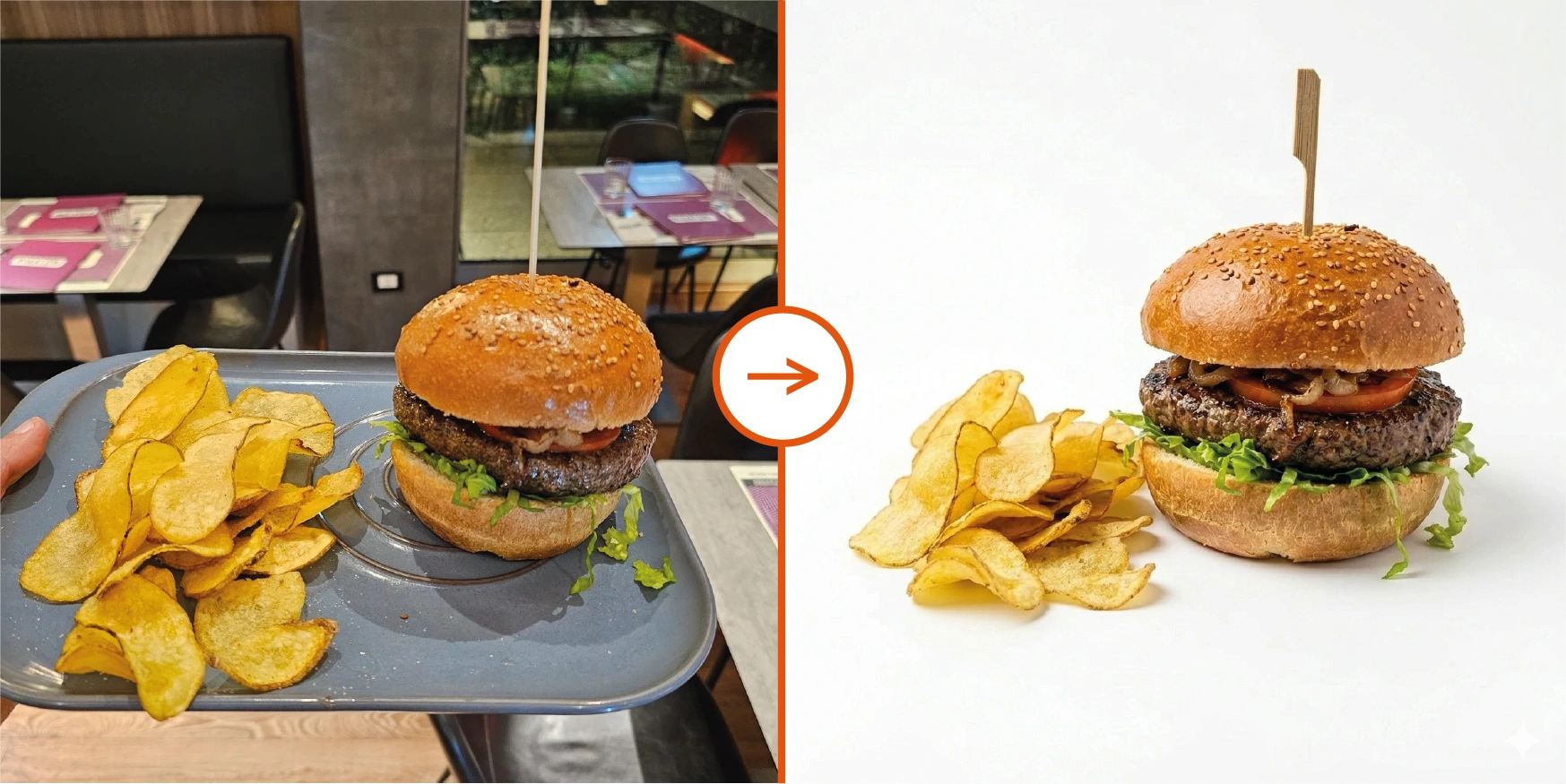
Optimize your digital menu on Uber Eats by leveraging the power of artificial intelligence with AI Food Photo. This tool transforms basic phone photos into studio-quality images in seconds: it enhances colors, cleans up backgrounds, and adjusts sizes to the platform's requirements, always maintaining the authenticity of your dishes.
In this guide you will find the key steps to optimize your menu, improve your restaurant's presentation, and increase your orders on Uber Eats.
1. Optimize your Uber Eats menu photos first
Uber Eats is a highly competitive platform, with over 1 million merchant partners worldwide competing for customer attention. One of the factors with the greatest impact on menu performance on Uber Eats is the visual quality of the dishes.
Why do Uber Eats online menu photos matter so much?
According to a US Foods survey cited by Uber Eats, 72% of diners prefer menus that include food photos over those without.
Platform users compare many options in very little time, and a dark, confusing, or unappetizing photo immediately lowers perceived value. Instead, an optimized photo makes your restaurant seem more trustworthy, the dish more desirable, and the menu more professional, increasing the likelihood that the user chooses exactly that product.
That is why optimizing your Uber Eats menu photos is not just an aesthetic detail. It is a real lever for visibility and sales conversion.
Professional photos or phone photos?
Historically, restaurants have had two extreme options:
- Hire a professional photographer, studio, and food stylist
- Take quick photos in a busy kitchen
The first is not sustainable for restaurants that need to constantly update menus or pay for just one or two photos for seasonal specials or promotions. The second usually results in dark and unappealing images. Without proper lighting, professional equipment, knowledge of food photography, time for editing, and so on, these photos can make your food look worse than it actually is, and that costs you money.
The good news is that today you no longer need to organize a full photoshoot every time. With a starting photo taken by yourself and a specialized AI photography tool for restaurants, you can achieve the same results as a food photography agency but without the costs or time of a traditional production.
How to use AI to improve food photos quickly
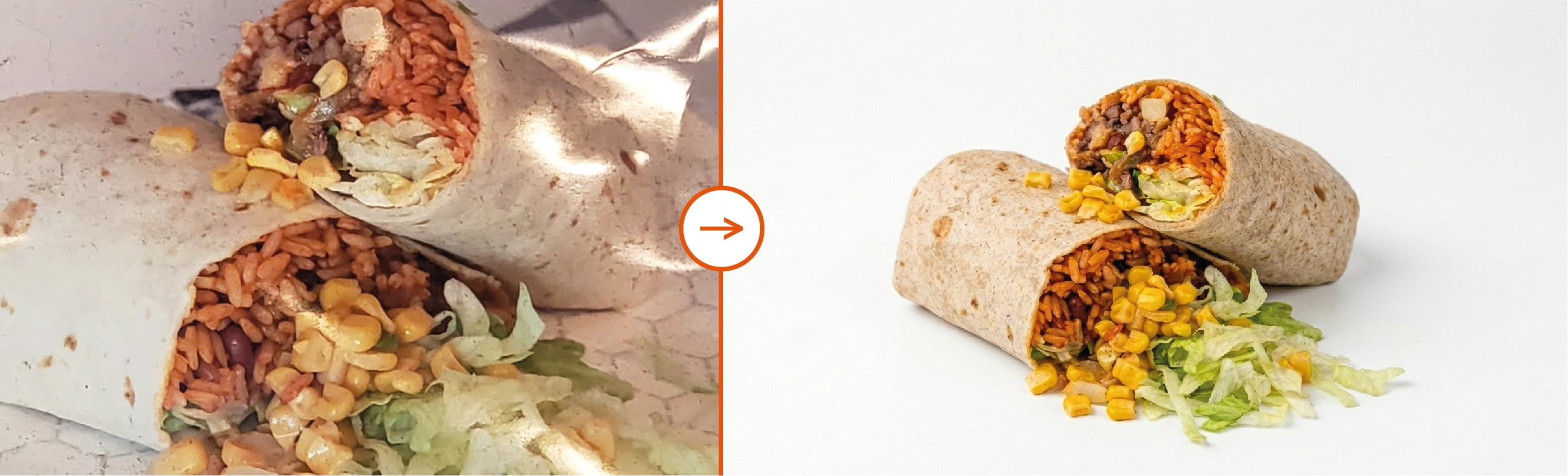
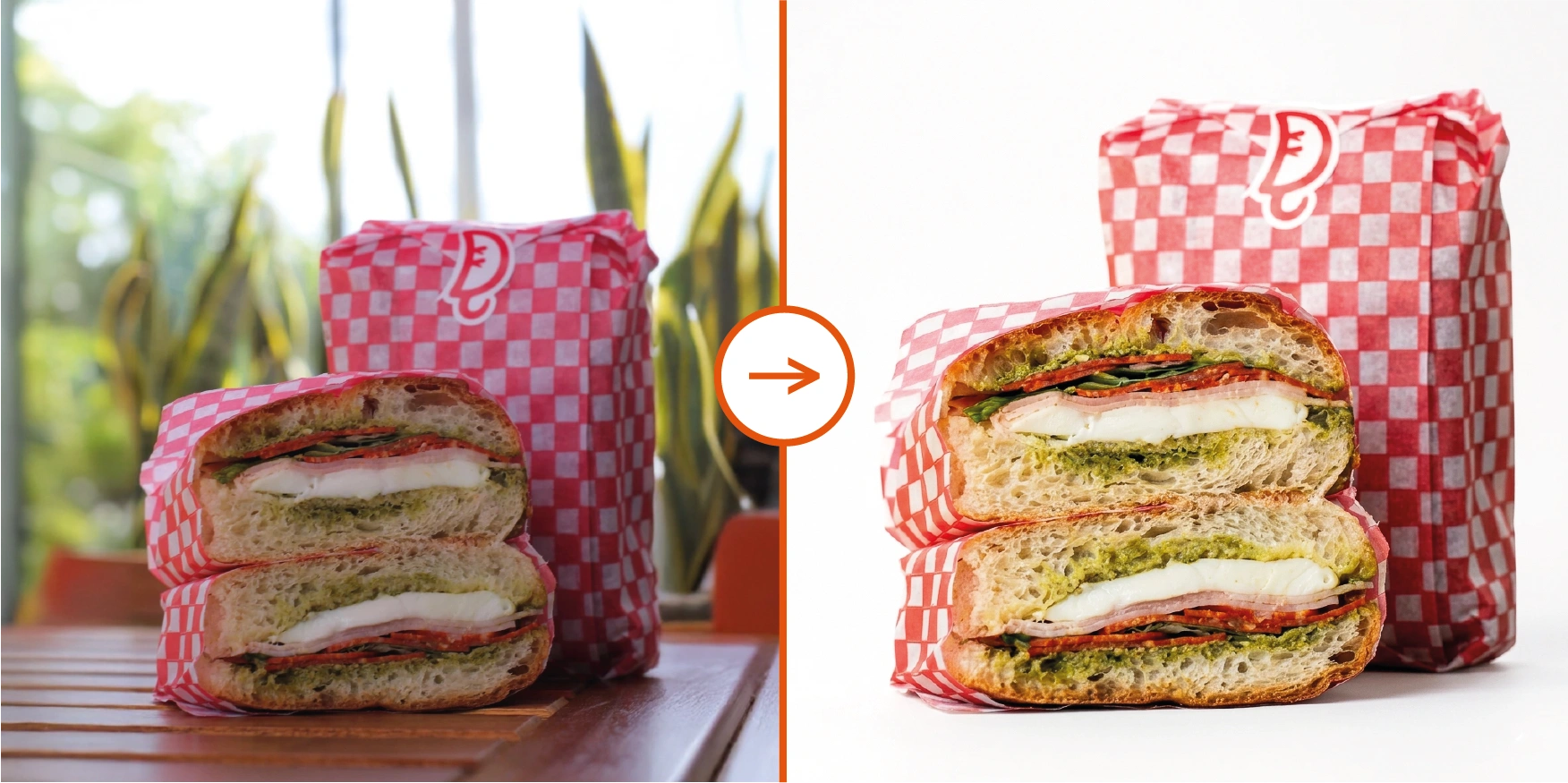
The most practical and simple workflow: you just need to take a photo of the dish with your phone (even before it leaves the kitchen), upload it to AI Food Photo, select the "Delivery" option and click "Transform with AI". In 20 seconds, you will have a professional-quality photo ready to stand out on your menu and drive sales.
This is what the AI does:
- Improves lighting and colors
- Adjusts framing and perspective
- Increases resolution
- Removes cluttered backgrounds and unnecessary elements
- Resizes following Uber Eats rules
If you want to dive deeper into how artificial intelligence can transform your food photos beyond a single platform, check out our complete guide: How to improve food photos online with AI for menus and delivery.
Uber Eats photo requirements to follow
Optimizing Uber Eats menu photos is not only about making them look better. It also means following the platform's technical requirements so your menu stays publishable and images get approved without friction.
Profile photo
- Resolution: 550 × 440px minimum
- Aspect ratio: 5:4
- File type: JPG, PNG or GIF
- File size: under 10 MB
Cover photo (hero image)
- Resolution: 2880 × 2304px recommended
- Aspect ratio: 5:4
- File type: JPEG
Menu item photos
- Resolution: 1200 × 800px recommended (550 × 440px minimum)
- Aspect ratio: 5:4 to 6:4 landscape (thumbnails auto-cropped to 1:1)
- File size: under 10 MB
- File type: JPG, PNG or GIF
Uber Eats typically reviews photos within 3 business days. Checking format, dimensions, and file size before uploading helps you avoid rejections, revisions, and unnecessary delays.
2. Pair better photos with descriptions that make people want to order
The photo gets people to stop. The description helps confirm the choice. When images and copy work together, the menu becomes much stronger.
The winning formula is: Cooking method + Key ingredients + Distinctive detail.
Instead of writing
"Cheeseburger."
Better write
"Hand-smashed double beef patty topped with melted aged cheddar, crisp house-pickled onions, and our secret sauce on a toasted brioche bun."
Using AI with models like Gemini or ChatGPT can also help you write more appetizing and detailed descriptions, ensuring a consistent tone and style across your entire menu.
This way you make sure to create a description that is easy enough to imagine and savor, to trigger cravings and drive purchases.
Update the menu when dishes, seasons, or promos change
When you introduce a new dish, a seasonal offering, or a promotion, having a suitable photo from the start helps you present it better and avoids leaving the menu with old or missing images, maintaining a more consistent experience for the user on Uber Eats.
3. Give your best photos more visibility with promos and Uber One
Why Uber One can amplify a menu that already looks strong
Being visible where Uber Eats's most active users search and order most often increases the chances that your photos are actually seen. If the menu is already strong visually, Uber One benefits and promotional placements can amplify that advantage.
Promotions work better with high-quality photos
If the visual appearance of the food in your photo is weak, the offer loses impact. If on the contrary it is strong and appetizing, the promotion becomes much more effective.
Uber Eats-Driven Promotions
- $0 Delivery: Automatic offers for new users on their first order or for stores in featured collections.
- Uber One Exclusives: Access to free delivery, reduced service fees, and higher-value discounts only for subscribers.
- Sponsored Listings: Pay to have your restaurant appear in prominent positions within search results and the app feed.
- Offers section: Centralized space in the app where seasonal discounts, special events, and holiday deals appear.
Restaurant-Managed Promotions
- Minimum Spend Discount: "Spend & Save" incentive (e.g., $5 off when spending $25) to increase the average order value.
- Segment-Based Offers: Specific discounts to attract New Customers or re-engage Lapsed Customers.
- Free Item (BOGO): Gift of a menu item upon reaching a minimum spend to encourage trying new dishes.
- Happy Hour: Scheduled discounts during low-demand hours to maximize sales throughout the day.
- Combo Meals: Exclusive bundles that combine several items at a special price to boost the average order value and encourage customers to try new pairings.
- Pickup Discount: A percentage off (often 10–20%) for customers who choose to pick up the order themselves, helping reduce delivery costs while driving additional volume.
In practice, prepare strong images first for your main dishes and hero items. Then use promos and banners to push the products you most want to grow.
4. Keep consistency between menu photos and the dish your customer receives
The menu photo is an expectation that packaging must validate. Avoid customer frustration by ensuring the product arrives as promoted; the consistency between image and reality is the key factor for generating reorders and improving your reputation on the app.
Delivery tips:
- Containers that prevent leaks for sauces, soups, and dressings
- Vented packaging for fried items to maintain crispiness during delivery
- Separate compartments for hot and cold foods to preserve proper temperature
- Branded touches like custom stickers or stamps to reinforce your restaurant's identity
- Practical details like napkins, utensils, condiments, or wet wipes to improve convenience
The goal is simple: make sure the dish arrives in a condition that does not betray what the customer saw in the menu. That consistency protects reviews, trust, and the chance of reordering.
5. Use reviews and operational quality to reinforce the menu
On Uber Eats, trust matters almost as much as the image. If menu photos are strong but ratings, comments, or the final experience disappoint, the customer won't walk away with a good impression of your restaurant. That is why it helps to treat photos, delivery, and review management as a single system.
To support conversion over time, focus on simple details that improve the overall experience:
- Include a handwritten thank-you note or printed message inside the bag
- Add a branded mint, sticker, or insert to create a memorable finishing touch
- Respond to all reviews within 48 hours, even negative ones
When imagery, perceived quality, and the real experience stay aligned, reviews tend to improve and the menu becomes more credible. This helps not only a single order, but your long-term performance and reorder rate.
Quick checklist to optimize your Uber Eats menu photos today
- 1
Review the photos you already have
Identify dishes with no image or with weak, old, or inconsistent photos.
- 2
Take simple base photos
A visible photo of the dish or drink is enough.
- 3
Enhance via AI
Open AI Food Photo, upload your photo, and select the "Delivery" option along with the 5:4 size to make dishes look more appetizing, brighter, and more professional.
- 4
Update descriptions and key dishes
Strengthen texts by making them more descriptive and appetizing.
- 5
Boost your best dishes with promos
Use discounts, offers, and promotions to increase your restaurant's visibility.
- 6
Check that the real experience is consistent
Packaging, delivery, and reviews should confirm what the customer saw in the photo.
Need to optimize your Uber Eats menu photos?
Stop losing sales to dark and blurry photos. Upload your first photo and see the transformation in 20 seconds.
Optimization guides for other delivery platforms
Do you also sell on other platforms? Check out our specific guides to optimize your menu on each one: